
How to Make Fresh Flowers Last Longer: A Florist's Guide

There's something special about bringing fresh flowers home.
Maybe someone gave them to you. Maybe you bought them for yourself. Or maybe you simply wanted a little bit of nature in the room.
Whatever the reason, it's always a little disappointing when those beautiful blooms start to wilt sooner than expected.
The good news? A little care can make a surprisingly big difference.
As a florist, I've learned that keeping flowers fresh isn't about doing anything complicated. It's mostly about giving them clean water, keeping them cool and paying attention to what they're telling you.
Here are some of the things I do at OBF to help flowers stay fresh for as long as possible — and how you can do the same at home.
1. Start with a clean vase
Before your flowers even go into water, make sure their vase is clean.
At OBF, I wash my flower buckets and vases thoroughly with detergent and water before using them. At home, give your vase a good wash to remove any residue from previous arrangements, then rinse it well before filling it with fresh water.
A clean vase gives your flowers a much better start.
And if you notice the water becoming cloudy or murky, don't ignore it. That's a sign that it's time for a refresh.
2. Give your stems a fresh cut
.
When I condition flowers at OBF, I generally cut the stems at a 45-degree angle using clean floral shears.
Why the angle?
A fresh cut gives the stem a clean surface for water uptake.
For most flowers, I like to cut the stems to a practical length for the arrangement I'm making. If I'm preparing flowers for a large vase arrangement, I'll sometimes keep the stems longer so I have more flexibility when designing.
And don't be afraid to recut the stems when you change the water.
3. Remove leaves that will sit underwater
Before putting your flowers into the vase, remove foliage that would be submerged below the waterline.
I also remove damaged petals and any leaves that don't look healthy when I'm conditioning flowers.
Submerged plant material can break down in the water, contributing to cloudy, unpleasant-smelling water and shortening the life of your flowers.
You don't need to strip every leaf from a stem. Just make sure the parts that will actually sit underwater are clean.
4. Give your flowers a proper first drink
This is something I pay a lot of attention to at OBF.
When flowers arrive at the studio, I want to get them hydrated as quickly as possible.
If I have time to condition everything immediately, I'll remove the packaging, strip the stems and get them into water.
But floristry doesn't always work that neatly.
Sometimes I have to leave for lunch, prepare another order or deal with a delivery. If I have a large batch of flowers to process, I'll initially place the stems into their water source as they are, packaging and all, so they can start hydrating first.
Then I'll condition them properly afterwards.
This is particularly useful when you're working with a lot of flowers at once: hydration first, perfection second.
5. Change the water — don't just top it up
This is probably one of the simplest things you can do for your flowers.
Don't just keep topping up the same vase of water.
Empty the old water, clean or rinse the vase as needed, add fresh water and recut the stems before putting the flowers back in.
At OBF, I change my flower water daily when I'm conditioning flowers for an upcoming order.
For flowers you're enjoying at home, you don't necessarily need to follow a florist's exact schedule, but regular complete water changes are much better than endlessly adding fresh water to old water.
Your flowers will thank you for the clean start.
6. Give them flower food
If your flowers came with a sachet of flower food, use it.
Commercial floral preservatives are designed to support cut flowers by providing nutrients while helping manage the water environment.
At OBF, I use Andgro Flower Food, which I've been using since I started the business.
I also include a sachet with every bouquet and vase arrangement I send out.
For your home arrangement, follow the instructions on the sachet rather than guessing the concentration. More isn't necessarily better.

7. Keep your flowers cool — but don't overdo it
Temperature makes a big difference to the life of cut flowers.
At OBF, I keep flowers in my floral chiller when they're not being worked on. I also make sure they're kept away from direct sunlight, heat and fruit, which can release ethylene gas and cause flowers to deteriorate more quickly.
But here's something I learned when I first started working from home: your flowers don't necessarily need to be in an air-conditioned room 24/7.
When I first started OBF, I had a study and hobby room at home where I worked on my flowers. I initially thought I needed to keep the air-conditioning running all day to keep everything fresh.
One day, I decided to experiment.
I closed the blinds, moved the flowers away from the windows and placed them in the coolest part of the room, even tucking some of them underneath my work table to keep them away from the room lights.
Surprisingly, they stayed fresh for almost the same amount of time as they did in an air-conditioned room.
In fact, I noticed that keeping them in air-conditioning constantly could sometimes make them dry out a little.
So if you don't have air-conditioning at home, don't panic. Find the coolest area you can, keep your flowers away from direct sunlight and heat, and work with the natural cooler temperatures in the evening where possible.
8. Keep flowers away from fruit and strong airflow
Two things that are easy to overlook are fruit and strong airflow.
Fruit can release ethylene gas, which can speed up the ageing of some cut flowers. So if you're keeping a bouquet overnight before gifting it, I'd keep it somewhere away from your fruit bowl.
I also wouldn't place your flowers directly in front of a fan or air-conditioner.
Strong, constant airflow can dry flowers out and cause delicate petals and stems to move around more than necessary.
A cool, shaded area is usually a much better choice.
If your home gets particularly warm during the day, you can also work with the temperature rather than against it. Keep the flowers away from windows, close your blinds or curtains during the hottest part of the day, and consider conditioning your flowers in the evening when your home is naturally cooler.
When I was working from home, I found that simple changes like these made a surprisingly big difference.
9. Some flowers need a little extra attention
Not every flower behaves the same way, and some varieties need a little more attention than others.
For me, lilies and hydrangeas are two flowers that require extra care.
Lilies can take quite a while to open, so patience is important. I also like to remove the pollen from the stamens once the flowers open. This isn't essential for keeping the flower alive, but I prefer to do it because lily pollen can stain petals, clothing and even your hands.
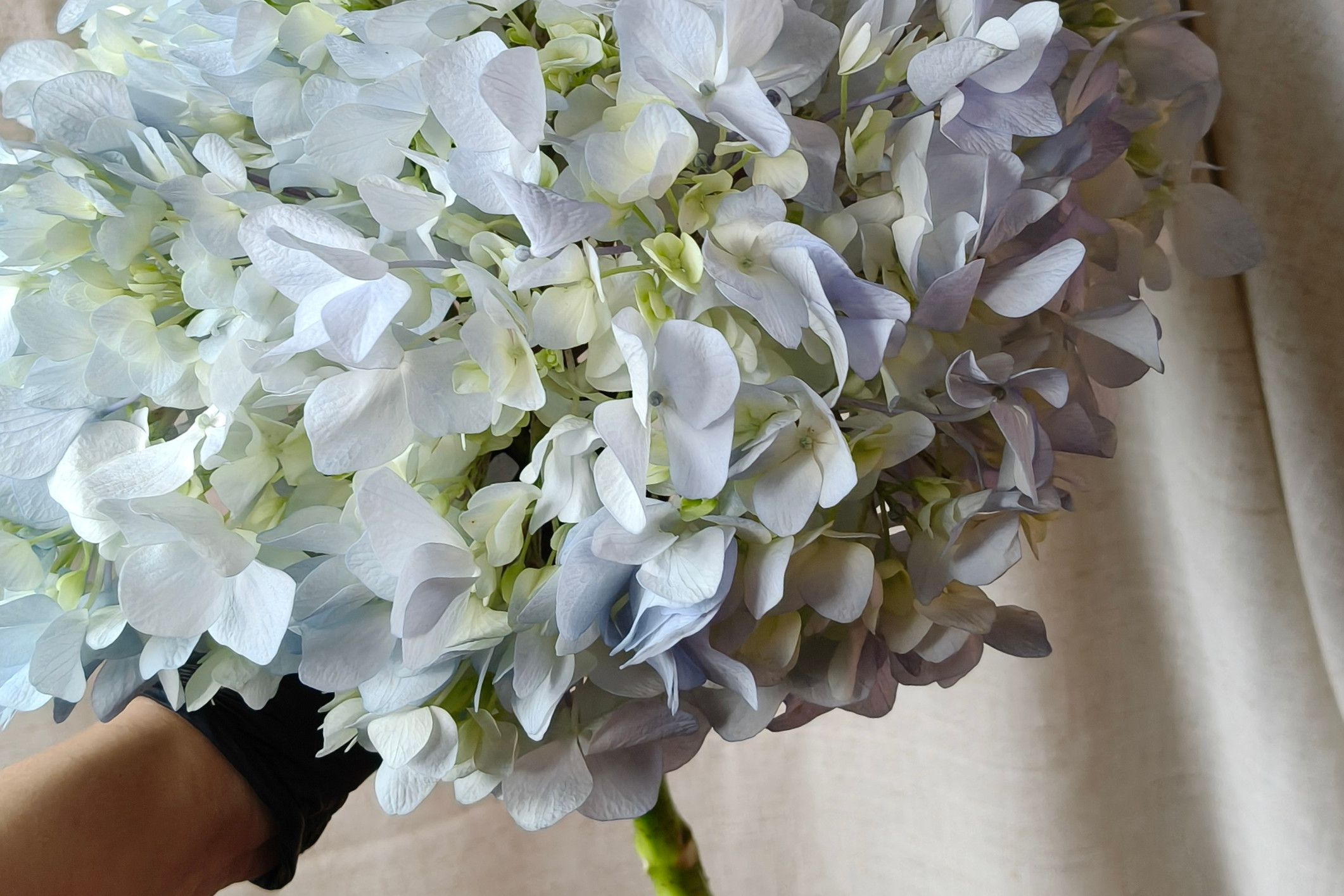
Hydrangeas are a different story. They are incredibly thirsty flowers and can wilt quickly when they aren't properly hydrated.
But don't give up on them too quickly. When properly conditioned and hydrated, hydrangeas can last beautifully.
If you're struggling with a wilted hydrangea, I've put together a more detailed guide on how I care for them in Kept in Bloom, my flower care guide.
10. Don't give up when your flowers start to wilt
Seeing a flower start to wilt doesn't always mean it's the end.
When I notice a flower starting to deteriorate, I'll first remove any petals that are damaged or wilting. This gives the rest of the bloom a chance to keep looking its best.
If the entire flower is wilting, I'll remove the whole stem from the arrangement. This keeps the tired bloom from taking away from the rest of the arrangement.
Hydrangeas are a good example. They can wilt dramatically when they're thirsty, but they can sometimes be revived with the right hydration technique.
I've shared the step-by-step method I use for hydrangeas in Kept in Bloom if you have one that needs a little rescue.
And when a flower really has reached the end of its vase life, that doesn't necessarily mean you have to throw it away immediately.
Some flowers can be dried and enjoyed in a completely different form. Simply hang suitable flowers upside down in a dry, well-ventilated area and let them dry naturally.
11. You don't need much to enjoy flowers
One thing I've learned through floristry is that you really don't need a lot to start creating with flowers.
You don't need a professional studio.
You don't need dozens of expensive tools.
And you certainly don't need to be a florist.
A clean vase, a pair of sharp floral shears and a little creativity can be enough to create something beautiful for your home or someone you love.
Don't be afraid to experiment. Flowers don't have to be arranged perfectly to bring joy.
A little care goes a long way
Fresh flowers aren't meant to last forever.
Eventually, every bloom will wilt. But I think that's part of what makes them special.
With a little care, you can enjoy them for much longer — and that small amount of effort can give you so much in return.
There is something lovely about walking into a room and seeing fresh flowers sitting in a vase. Maybe they were given to you by someone you love. Maybe you bought them for yourself simply because you wanted something beautiful around you.
Flowers bring a little bit of nature into our everyday lives, and sometimes that's all we need.
So the next time you bring fresh flowers home, give them a little care. Change their water. Trim their stems. Keep them cool. Pay attention to what they need.
They may eventually wilt, but the joy they bring you while they're here is worth it. 🌿
Want to keep your flowers looking beautiful for longer?
Kept in Bloom is my practical flower care guide, created from the techniques I use as a florist to help you care for your fresh flowers at home.


