
What You Really Need to Start Arranging Flowers at Home
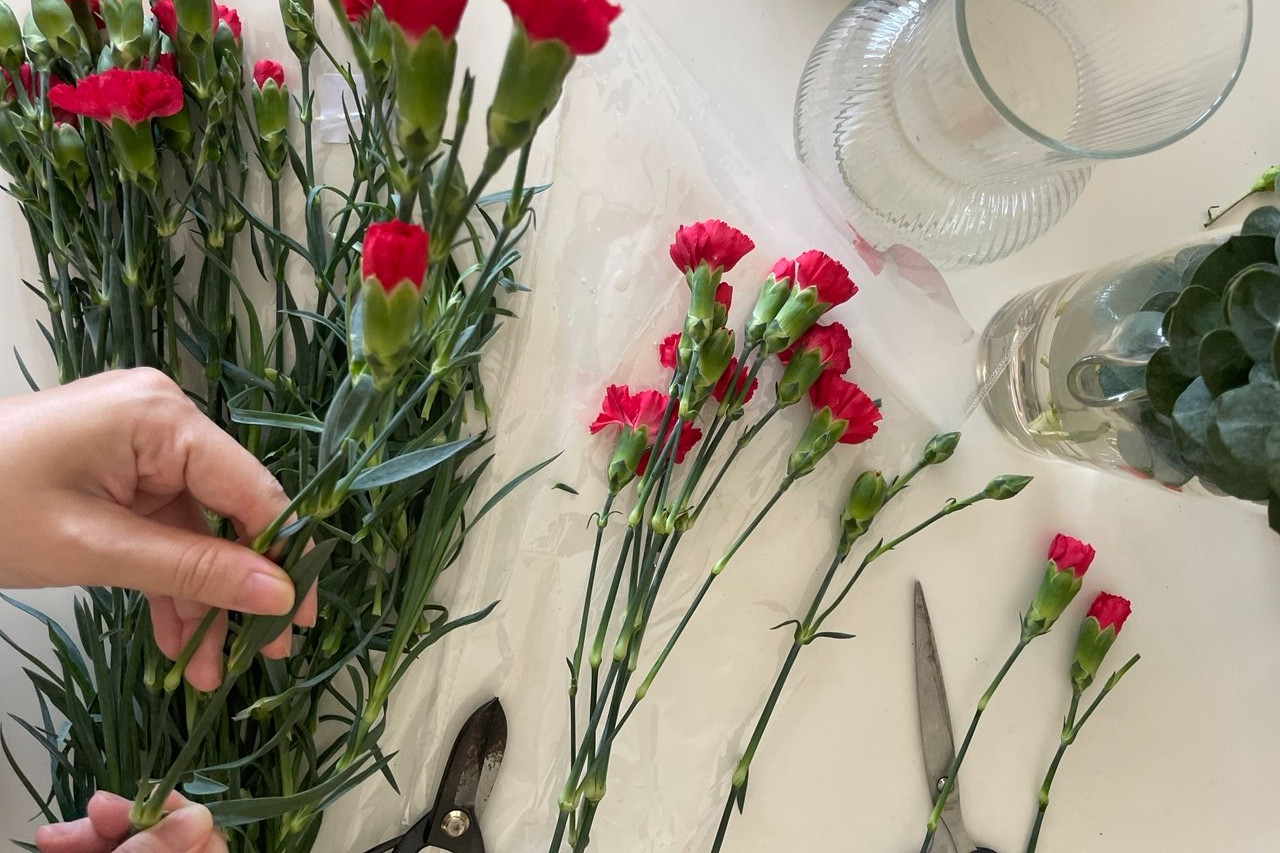
You Probably Need Less Than You Think
If you've ever looked at a beautiful flower arrangement and thought, I'd love to try making one myself, you might also have wondered what you actually need to get started.
The good news is that you probably need much less than you think.
You don't need a professional florist studio, a huge collection of tools or years of experience. With a few fresh flowers, a suitable vessel, a couple of basic tools and somewhere to work, you already have most of what you need to start arranging flowers at home.
The rest comes with practice.
Start With the Flowers You Love
The most obvious thing you'll need is, of course, flowers.
But you don't need a huge selection to create something beautiful. In fact, when you're starting out, working with just a few flower varieties can make the process much less overwhelming.
You could choose one flower that catches your eye, add another variety for a little contrast, and finish with some foliage to bring everything together.
Don't worry too much about choosing the “right” flowers. Start with colours, shapes and textures that you naturally like. Part of the fun of arranging flowers is discovering how different blooms work together as you experiment.
If you're buying your flowers from a florist, flower shop or market, you can also ask what's looking particularly fresh that day. Sometimes, letting the flowers available to you inspire the arrangement is much more enjoyable than deciding exactly what you want before you start.

You Don't Need a Fancy Vase
Before you go out and buy a collection of florist vases, take a look around your home first.
A simple vase, jug, glass jar or ceramic vessel can all work beautifully for flower arranging, as long as they can hold water securely.
The vessel you choose can also influence the overall look of your arrangement. A wider opening gives you more room to spread your stems, while a narrower opening can help keep them gathered together.
You can even have fun matching the vessel to the flowers. A simple arrangement in an interesting ceramic pot can look just as intentional as one in a traditional flower vase.
The goal isn't to have the perfect vase. It's to find something that works with the flowers you want to arrange.
A Few Basic Tools Are Enough
You don't need a suitcase full of florist tools to start arranging flowers. A few basics will take you surprisingly far.
A good pair of floral shears or secateurs is probably the most important tool to have. You'll use them to trim stems, remove unwanted foliage and prepare your flowers for arranging.
You'll also need a clean container for your flowers and clean water while you're working. Keeping your flowers hydrated as you arrange helps prevent them from sitting dry for too long.
As you become more comfortable, you may find yourself reaching for other tools such as floral tape, wire or different types of flower supports. These can be useful for particular techniques, but they're not necessary when you're just starting out.
Start with the basics. You can always build your toolkit as your skills grow.

Give Yourself a Little Space to Work
You don't need a dedicated flower studio to start arranging at home. Your kitchen counter, dining table or another clear surface can work just fine.
Ideally, choose somewhere with enough room to spread out your flowers, tools and vessel without everything feeling cramped. Having easy access to water is helpful too, especially when you're trimming and conditioning fresh stems.
It also helps to protect your work surface from water and flower debris. A simple towel or washable mat can make cleanup much easier afterwards.
And don't worry if your workspace doesn't look like a florist's studio. When you're starting out, a little space to experiment is all you really need.
What You Don't Need
It's easy to think you need all the right equipment before you can start arranging flowers. You don't.
You don't need an expensive collection of florist tools, dozens of flower varieties or a dedicated studio. You don't need to have years of floristry experience, either.
And you certainly don't need your first arrangement to look like it came from a professional florist.
Start with what you have. Learn as you go. Add things when you actually need them.
The more arrangements you make, the more you'll naturally discover which tools and materials are useful for the way you like to work.
The Most Important Thing? Start Arranging.
The best way to learn how to arrange flowers is simply to start.
Your first arrangement might not turn out exactly how you imagined — and that's completely okay. You might discover that you prefer a little more height, less foliage or a completely different colour combination than you expected.
Every arrangement gives you something to learn. You'll gradually become more comfortable with how flowers move, how different shapes work together and how to create a composition that feels balanced.
You don't need to know everything before you begin. Give yourself permission to experiment, make a few imperfect arrangements and enjoy the process.
After all, flowers don't have to be perfect to bring a little beauty into your home.
You really don't need much to start arranging flowers at home: a few fresh blooms, something to put them in, a couple of basic tools and a little space to work.
The rest comes with practice.
So pick up a few flowers you love, find a vessel at home and give it a try. You might be surprised by what you can create.


